
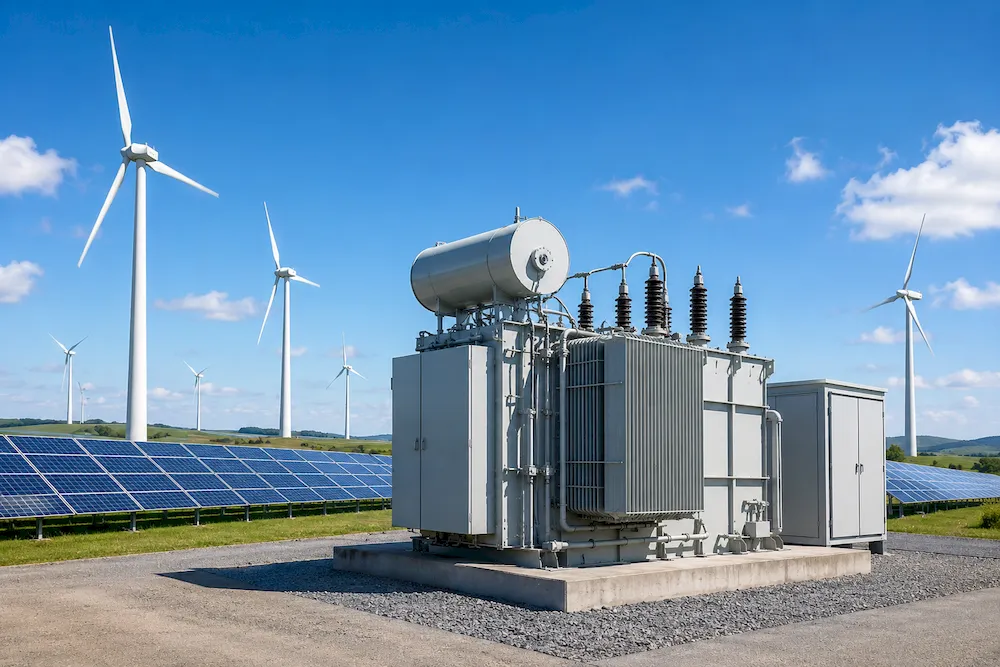
Solar and wind energy are becoming important sources of electricity around the world. These systems produce clean power, but the electricity cannot always be sent directly to the power grid.
Solar panels and wind turbines usually produce electricity at a voltage that is different from the voltage used by the local grid. A renewable energy transformer changes this voltage and helps the power move safely from the generation system to the grid.
Without the right transformer, a solar or wind project may have high power loss, unstable operation, or equipment damage. This is why transformer selection is an important part of every renewable energy project.
What Is a Renewable Energy Transformer?
A renewable energy transformer is designed for solar farms, wind farms, energy storage systems, and other clean energy projects.
Its main function is to increase or reduce voltage. In most solar and wind projects, the transformer increases the voltage before the electricity enters a substation or power grid.
For example, a solar inverter may produce electricity at 400 V, 690 V, or another low-voltage level. A transformer can increase this voltage to 10 kV, 20 kV, 33 kV, 35 kV, or a higher level.
Renewable energy transformers may include:
- Inverter step-up transformers
- Wind turbine transformers
- Solar power transformers
- Main power transformers
- Pad-mounted transformers
- Prefabricated substations
- Energy storage transformers
- Isolation transformers
How Transformers Support Solar Power Projects
Solar panels produce direct current electricity. An inverter changes this electricity into alternating current. The transformer then changes the voltage so the electricity can enter the collection network or public grid.
Increasing the Voltage
A large solar farm may include thousands of solar panels and many inverters. Each inverter produces electricity at a relatively low voltage.
Sending low-voltage electricity over a long distance can cause high power loss. A step-up transformer increases the voltage and reduces the current. This makes power transmission more efficient.
Connecting the Solar Farm to the Grid
The voltage from the solar system must match the voltage of the grid. A transformer provides the correct voltage level for grid connection.
In a large project, smaller transformers may collect power from different groups of solar panels. A main transformer then increases the voltage again before the electricity enters the transmission network.
Providing Electrical Isolation
Some transformer designs provide electrical separation between the inverter and the grid. This can improve system protection and reduce the effect of electrical faults.
The correct insulation and grounding design also help protect workers and equipment.
How Transformers Support Wind Power Projects
Wind turbines generate electricity when wind turns their blades. The voltage produced by the generator must also be adjusted before the power can be sent to the grid.
Transformers Inside or Near Wind Turbines
A wind turbine transformer may be installed inside the tower, inside the nacelle, or near the base of the turbine.
Its job is to increase the generator voltage to the collection system voltage. The electricity from many turbines is then sent to a central substation.
Because space inside a wind turbine is limited, the transformer may need a compact design. It must also handle vibration, changing loads, and difficult weather conditions.
Main Transformers for Wind Farms
A wind farm normally uses a main transformer at the substation. This transformer collects electricity from the turbines and increases it to the grid voltage.
The main transformer is important because the entire wind farm may depend on it. It must provide stable operation, strong cooling, and reliable protection.
Special Working Conditions in Renewable Energy Projects
Solar and wind transformers often work under conditions that are different from normal distribution transformers.
Changing Electrical Loads
Solar power changes with sunlight. Wind power changes with wind speed. This means the transformer load can rise and fall many times during the day.
The transformer must handle these changing loads without overheating or losing efficiency.
Harmonics from Inverters
Solar and wind systems use power electronic equipment such as inverters and converters. These devices can produce harmonics.
Harmonics may increase transformer temperature and cause additional electrical loss. The transformer should be designed with the actual harmonic conditions in mind.
Outdoor Environments
Many renewable energy transformers are installed outdoors. They may face:
- High or low temperatures
- Strong sunlight
- Rain and snow
- Sand and dust
- Salt air
- High humidity
- Strong wind
- High altitude
The enclosure, paint, insulation, cooling system, and protection level must match the local environment.
Oil-Immersed or Dry-Type Transformer?
Both oil-immersed and dry-type transformers can be used in renewable energy projects.
Oil-Immersed Transformers
Oil-immersed transformers provide good cooling and are widely used in solar farms, wind farms, and outdoor substations.
They are often suitable for:
- High-capacity projects
- Outdoor installation
- Main substations
- Long-term heavy loads
- Projects that need strong cooling
Dry-Type Transformers
Dry-type transformers do not contain insulating oil. They are often used where fire safety, low maintenance, or indoor installation is important.
They may be suitable for:
- Indoor inverter rooms
- Wind turbine towers
- Energy storage buildings
- Locations near people or equipment
- Projects with strict fire requirements
The final choice depends on capacity, space, safety rules, climate, and budget.
Important Transformer Parameters
Before ordering a renewable energy transformer, the project team should confirm the main technical information.
This information may include:
- Rated capacity
- Primary and secondary voltage
- Frequency
- Number of phases
- Vector group
- Impedance
- Tap range
- Cooling method
- Harmonic level
- Insulation level
- Short-circuit strength
- Installation altitude
- Ambient temperature
- Grid standards
- Required accessories
The manufacturer should also receive the inverter data, system drawings, load profile, and project specifications.
Testing and Quality Control
Renewable energy projects usually need reliable operation for many years. Transformer testing is therefore very important.
Common factory tests include:
- Voltage ratio test
- Winding resistance test
- Insulation resistance test
- No-load loss test
- Load loss test
- Impedance test
- Applied voltage test
- Induced voltage test
- Oil quality test
- Temperature-rise test when required
The supplier should provide test reports and technical documents before shipment.
How to Choose a Transformer Supplier
A suitable transformer supplier should understand both transformer manufacturing and renewable energy applications.
Buyers should review:
- Production experience
- Engineering ability
- Testing facilities
- Quality management system
- International project experience
- Custom design capability
- Delivery schedule
- Technical documentation
- After-sales support
A low price is not the only factor. Efficiency, reliability, service life, and technical support can have a greater effect on the total project cost.
Conclusion
Renewable energy transformers connect solar panels, wind turbines, and energy storage systems to electrical networks. They increase voltage, reduce transmission loss, provide isolation, and support safe grid connection.
Solar and wind projects have changing loads, inverter harmonics, and difficult outdoor conditions. The transformer must be designed for these special requirements.
Before selecting a transformer, confirm the project voltage, capacity, environment, standards, grid requirements, and equipment data. Working with an experienced transformer manufacturer can help improve system safety, efficiency, and long-term reliability.