
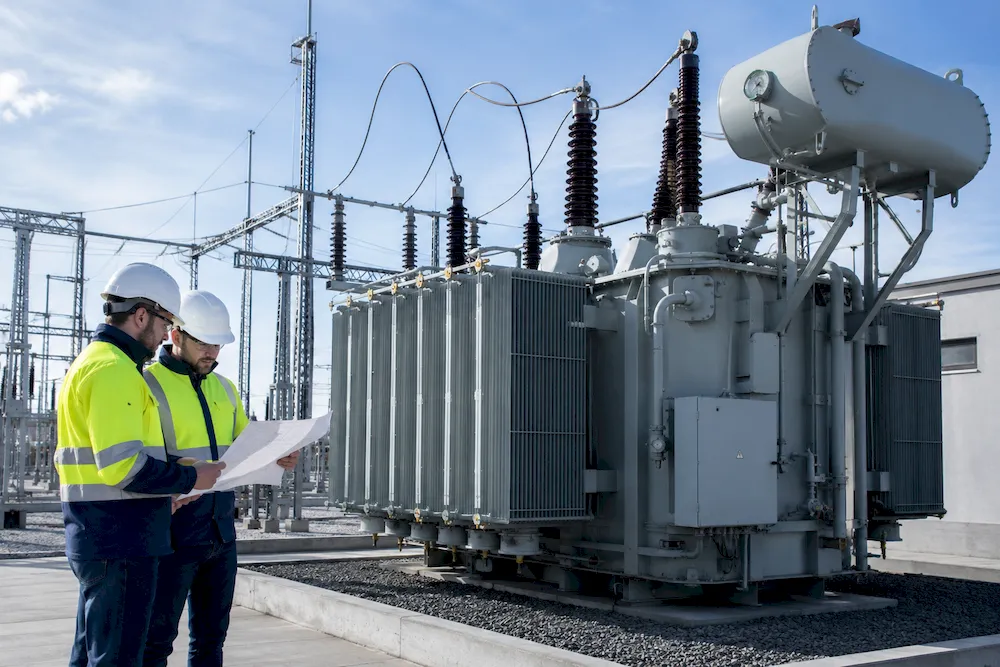
A power transformer is an important part of any electrical system. It changes voltage from one level to another and helps electricity move safely and efficiently. Power transformers are widely used in power plants, substations, factories, renewable energy projects, data centers, mining sites, and large buildings.
Choosing the wrong transformer may cause power loss, equipment damage, high operating costs, or safety problems. For this reason, buyers should study the project requirements carefully before placing an order.
This guide explains the main points you should consider when choosing a power transformer.
Understand Your Project Requirements
Before contacting a transformer manufacturer, collect the basic technical information about your project. Clear information helps the manufacturer recommend the correct transformer and prepare an accurate quotation.
Confirm the Rated Capacity
Transformer capacity is normally measured in kVA or MVA. It shows how much electrical load the transformer can handle.
You should calculate the total load of all connected equipment. It is also important to consider future expansion. A transformer should not be too small because it may overheat when the load is high. However, a transformer that is much larger than needed may cost more and operate less efficiently.
A reasonable safety margin is often added to the calculated load. The final capacity should be confirmed by a qualified electrical engineer.
Check the Primary and Secondary Voltage
The manufacturer needs to know both the input voltage and output voltage.
For example, a transformer may change:
- 35 kV to 10 kV
- 10 kV to 400 V
- 33 kV to 11 kV
- 132 kV to 33 kV
Voltage standards are different in different countries and projects. Always provide the exact system voltage instead of only giving a general description.
You should also confirm the frequency, such as 50 Hz or 60 Hz.
Choose the Correct Transformer Type
Different transformer types are suitable for different environments and applications.
Oil-Immersed Transformers
Oil-immersed transformers use insulating oil for cooling and insulation. They are widely used in substations, industrial plants, utility networks, renewable energy projects, and outdoor installations.
Their main advantages include:
- Good cooling performance
- High capacity options
- Reliable operation
- Long service life
- Suitable for outdoor use
However, buyers must consider oil leakage prevention, fire safety, maintenance, and environmental requirements.
Dry-Type Transformers
Dry-type transformers use air or solid insulation instead of transformer oil. They are often installed inside buildings, factories, shopping centers, hospitals, tunnels, data centers, and other places with strict fire safety requirements.
Their advantages include:
- No insulating oil
- Lower fire risk
- Easier maintenance
- Suitable for indoor installation
- Cleaner operation
Dry-type transformers may cost more than standard oil-immersed units, especially for larger capacities.
Consider the Installation Environment
The installation location has a major effect on transformer design.
Tell the manufacturer whether the transformer will be installed indoors or outdoors. You should also provide information about:
- Maximum and minimum temperature
- Altitude
- Humidity
- Dust levels
- Rain, snow, or strong wind
- Corrosive gases
- Seismic conditions
- Available installation space
High altitude can reduce cooling and insulation performance. Extremely hot environments may require a special cooling design. Coastal or chemical environments may need stronger anti-corrosion protection.
For outdoor transformers, the enclosure and protection level should be suitable for local weather conditions.
Review Important Technical Parameters
Transformer selection is not only about capacity and voltage. Several other technical parameters must also be confirmed.
Vector Group
The vector group describes the connection and phase relationship of the transformer windings. Common examples include Dyn11 and Yyn0.
The correct vector group depends on the electrical system and connected equipment. It should normally be provided by the project designer or electrical engineer.
Impedance
Transformer impedance affects short-circuit current and voltage drop. If several transformers will operate in parallel, their impedance values must be compatible.
Cooling Method
Common cooling methods include natural oil and air cooling, forced-air cooling, and other systems for large transformers.
The correct method depends on transformer capacity, load, climate, and installation conditions.
Tap Changer
A tap changer adjusts the transformer voltage when the input voltage changes.
There are two main types:
- Off-circuit tap changer
- On-load tap changer
An off-circuit tap changer can only be adjusted when the transformer is not energized. An on-load tap changer can regulate voltage while the transformer is operating.
Check Standards and Certification Requirements
Before ordering, confirm which standards your project must follow.
International projects may require standards or certifications such as:
- IEC
- IEEE
- ANSI
- UL
- CE
- TÜV
- KEMA
- GOST
The required standard may depend on the country, power utility, consultant, or project owner.
Do not assume that every transformer automatically meets every standard. Clearly list the required standards in your inquiry and contract.
Ask About Testing and Quality Control
Testing is essential for transformer safety and reliability. Every transformer should complete routine tests before shipment.
Depending on the project, buyers may also request type tests or special tests.
Common tests include:
- Winding resistance measurement
- Voltage ratio test
- Insulation resistance test
- No-load loss test
- Load loss test
- Impedance voltage test
- Applied voltage test
- Induced voltage test
- Oil testing
- Temperature-rise test
Ask the manufacturer to provide a factory test report with the transformer.
For important projects, the customer or a third-party inspection company may attend the factory acceptance test.
Evaluate the Transformer Manufacturer
A reliable supplier should have strong production capacity, qualified engineers, suitable testing equipment, and an established quality management system.
Before choosing a manufacturer, review:
- Manufacturing experience
- Product range
- Factory equipment
- Testing facilities
- Quality certifications
- Export experience
- Technical response speed
- Project references
- After-sales service
Do not choose a supplier only because its price is lower. A transformer is a long-term investment. Product quality, technical support, efficiency, and service life are usually more important than the initial price.
Prepare Complete Information for a Quotation
To receive a suitable proposal, send the manufacturer as much information as possible.
Your inquiry should include:
- Transformer type
- Rated capacity
- Primary and secondary voltage
- Frequency
- Number of phases
- Vector group
- Impedance
- Tap range
- Cooling method
- Installation environment
- Required standards
- Accessories
- Quantity
- Destination country or port
You can also send technical specifications, single-line diagrams, drawings, or tender documents.
Conclusion
Choosing the right power transformer requires careful technical review. You need to confirm the capacity, voltage, transformer type, installation environment, standards, testing requirements, and accessories.
A professional transformer manufacturer can review your project information and recommend a suitable solution. Clear communication at the beginning helps reduce technical problems, control costs, and ensure safe operation.
Before placing an order, make sure all technical parameters, drawings, tests, documents, delivery terms, and after-sales responsibilities are clearly confirmed. The right transformer will provide stable, efficient, and reliable power for your project for many years.